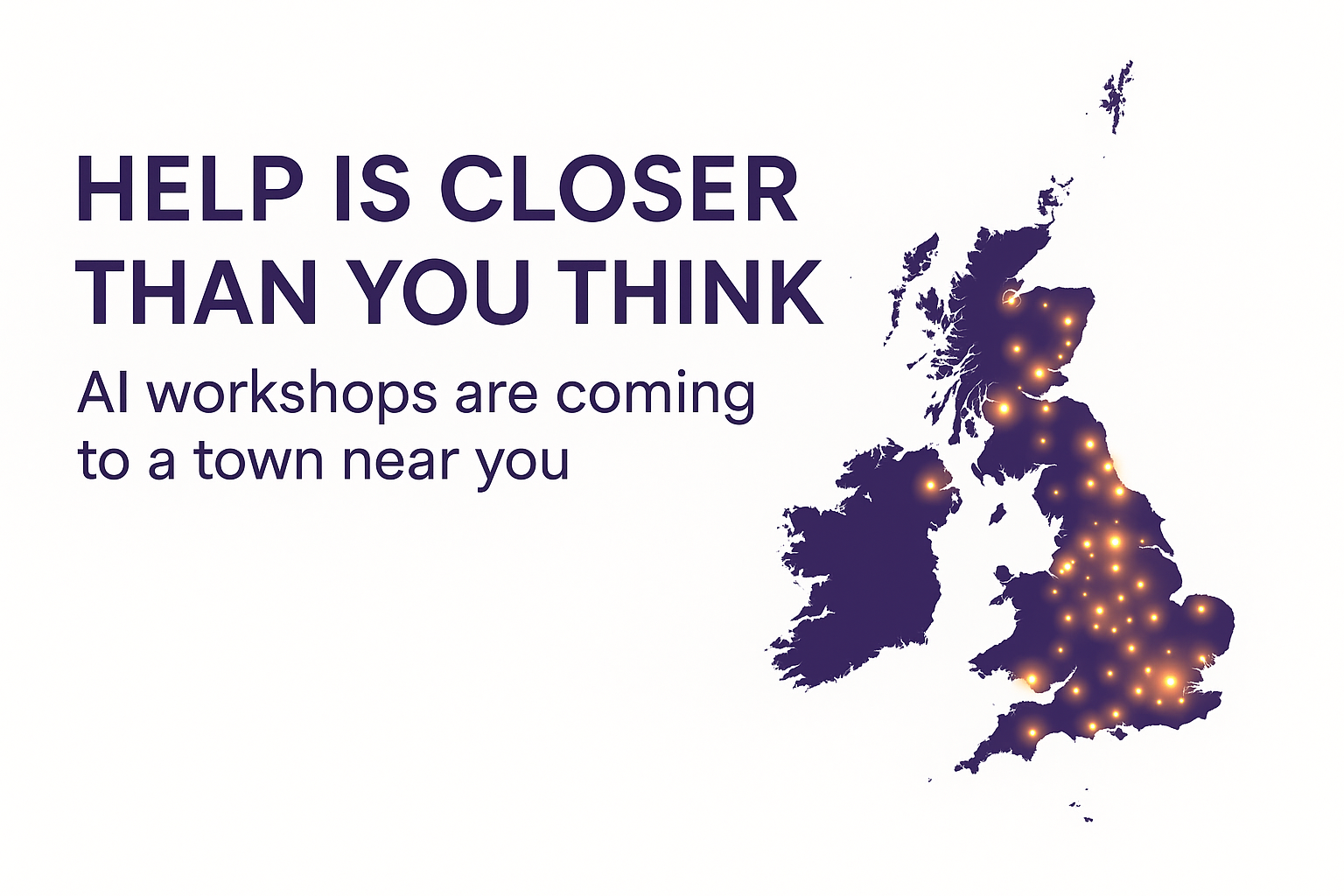
AI news in the UK this week. There is good news for small firms this week. Google and NatWest have teamed up with the Department for Business and Trade to run hands-on AI workshops for SMEs across the UK. The aim is practical help, not hype, so owners and marketers can try tools that save time and money right away. Google’s message is simple: UK SMEs are leaving productivity on the table if they do not adopt AI soon. Their analysis suggests everyday tools could lift SME productivity by around 20%. UKTN+2City AM+2
The Bank of England is also signalling a supportive approach. Governor Andrew Bailey has called for a pragmatic balance in AI oversight, one that manages risks without choking innovation. That tone matters because it reduces fear that rules will change overnight or make sensible experiments impossible. Reuters+1
There is structural momentum too. The UK’s latest AI Sector Study shows a fast-growing ecosystem and confirms that newly identified AI firms are overwhelmingly SMEs. For buyers, that means more local vendors, more niche tools and more competition on price. GOV.UK
Now the harder part. Despite the extra support, adoption in many small and micro businesses is still slow. Google has been blunt that the UK is falling behind peers, and the barriers we keep hearing remain the same: uncertainty about return, shortage of skills, and perceived cost. techUK’s latest snapshot ranks lack of expertise as the top blocker, with high costs and ROI doubts close behind. City AM+1
There is another risk that is easy to miss. Staff are increasingly using unapproved “shadow AI” tools to get work done. Microsoft’s UK research says the majority of employees have tried consumer AI at work, often weekly, without company policies or safeguards. That can create data-privacy and security exposure, even when intentions are good. Microsoft UK Stories
So where does that leave a time-pressed owner or marketing manager? My take is straightforward. The help is growing, the policy tone is constructive, and there are more UK-made tools than ever. The gap to close is confidence and clarity. Three practical moves will get you there.
1) Book a real workshop, not another webinar. If Google, NatWest and DBT are in your city, get a seat and bring one use case to test, for example “summarise meeting notes” or “draft a product description”. I can also source relevant sessions near you if dates do not suit.
2) Put a simple AI strategy on one page. List the tasks you will try, the tools you will allow, how you will review outputs, and what data is off-limits. This kills uncertainty and reduces the risk of shadow AI. I can help you draft a version that fits your sector and risk tolerance.
3) Pilot one plug-in that saves time this week. Aim for something you can set up in minutes and measure quickly. Examples include:
- Meeting follow-ups with Otter.ai or Fireflies, then tidy in ChatGPT.
- Social scheduling with Buffer or Hootsuite’s assistants.
- A lightweight customer FAQ chatbot like Tidio or Intercom Starter.
- Finance admin in Xero or QuickBooks with AI-assisted categorisation.
These are low cost, easy to reverse, and confidence building. (They also align with the skills and cost barriers techUK highlights.)
Bottom line
This is a “good news if you act” moment. Training and support are expanding, the regulator wants balance, and the supplier base is dominated by SMEs who understand SME realities. The bad news is that hesitation persists, shadow AI increases risk, and the usual barriers are still there. The fastest way through is a small, guided pilot that proves value and sets safe guardrails.
If you want a hand, I can find the right workshop for your area, shape a one-page AI strategy with clear dos and don’ts, and help you implement a couple of simple tools that improve productivity without blowing the budget.
A short chat is often all it takes to get moving. Get in touch here. 

