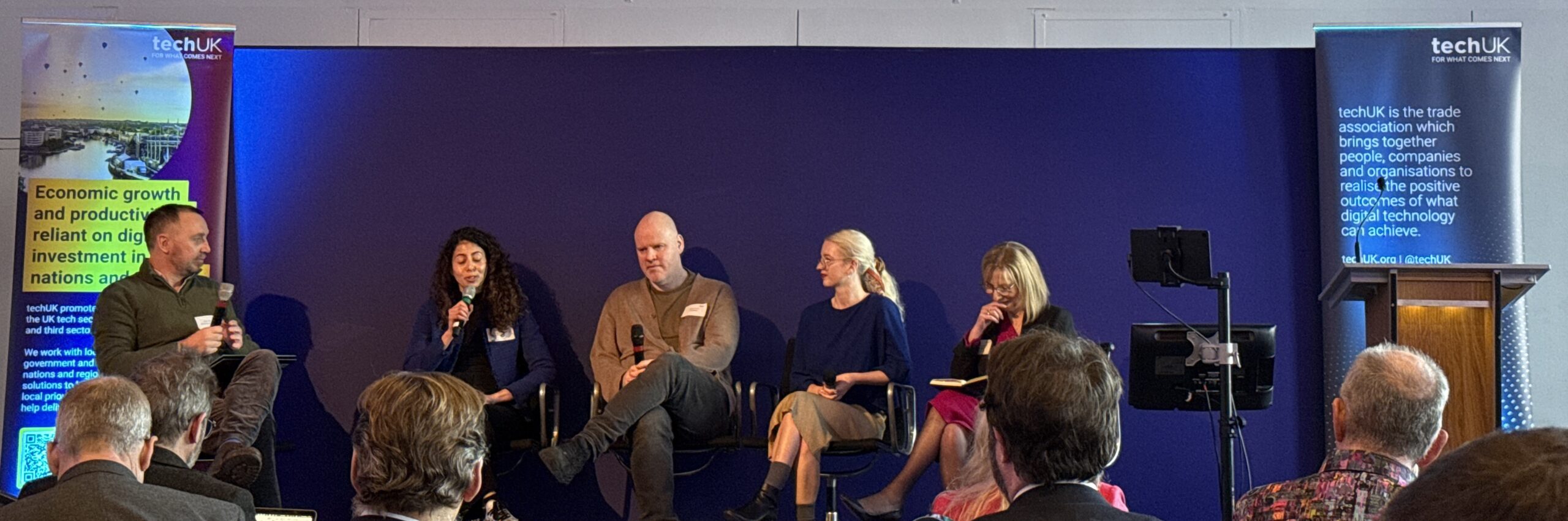
Last week I attended the UK Digital Economy Conference at Dynamic Earth in Edinburgh. It was a genuinely valuable event that brought together leaders from government, technology, academia and business to discuss how digital innovation is shaping the future of the UK economy. The atmosphere was positive and forward looking, with a strong sense that momentum is building across regions and across industries.
The conference centred on the role of digital transformation in enabling growth, improving productivity and ensuring that every part of the UK benefits from the opportunities ahead. Below is a summary of the key themes that stood out, with space to add observations from my perspective and experience working with SMEs in Scotland and across the UK.
Digital Vision for Scotland and the UK
The opening keynote by Deputy First Minister, Kate Forbes, explored the Scottish Government’s approach to driving digital growth, digital skills and innovation across Scotland. The message was clear: Digital capability is becoming fundamental to long term economic competitiveness, and the strength of the digital economy is heavily influenced by how effectively smaller businesses and regional ecosystems adopt new technologies.
I thought it was a very positive outlook for Scotland which continues to be innovative in the tech sector, successful in attracting tech inward investment and being recognised by the Scottish government as a key area for economic growth.
While this was generally a conference about the broader tech sector, comments from the floor and indeed the various panels did keep coming back to how AI was going to impact the sector. Because its introduction and rapid deployment is so recent, then there was quite a lot of very interesting and unscripted responses.
Local Digital Index 2025
One of the most interesting insights came from data presented through the Local Digital Index 2025 presented by Hollie Hodgson of the Tussell Group. This highlighted regional differences in digital strength, infrastructure and investment across the UK. It demonstrated where digital capability is already performing strongly and where support and targeted investment could accelerate growth.
The speaker also made two other interesting observations which were “Outwith London and SE England (Cambridge), Edinburgh is a tech hotspot” and that “Having one of the few Supercomputers in Europe based in Edinburgh will be a recruitment magnet for talent and the city”.
For SMEs, the practical takeaway is that location matters, but it does not define potential. Strong networks, access to support and collaboration across local ecosystems are emerging as critical factors.
One of the panel comments was “it’s about the data and not the vibe”, which while I understand the sentiment, sounded a little bit like avoiding the impact of AI. And that very much chimes with the data that keeps suggesting the SME’s are the least likely to adopt AI.
Indeed the most recent landmark government report published this summer highlights the issue. The SME Digital Adoption Taskforce found that 43% of UK small and medium-sized enterprises have no plans to adopt AI, leaving a potential £94 billion in annual GDP growth on the table.
Digital Skills and Workforce Development
A recurring theme throughout the day was the urgency of developing digital skills at every level of the workforce. Employers continue to identify the gap between available skills and what is required to adopt digital tools effectively. This is clearly relevant for SMEs, where limited resources and time can make upskilling a challenge.
The conversation around digital skills aligned closely with the release of the UK Government’s new AI Skills Framework and adoption tools. These resources provide structured support for businesses starting to build digital capability.
One of the observations of the panel was “There wasn’t a skills gap but an experience gap”, highlighting both the challenge and the opportunity for retraining an existing workforce.
Investment, Innovation and Scale Up
Another core discussion focused on how investment and collaborative innovation can support scale ups and growth companies. Speakers emphasised the importance of regional investment, accessible funding pathways and stronger links between industry and education.
This agenda matters for SMEs because innovation and digital adoption are no longer optional. They are becoming key competitive differentiators, particularly against larger and more digitally mature organisations.
And again I hark back to my concern that if SME’s are not seeing the opportunity that AI brings, then looking for investment and other help will not be high on their agenda.
Infrastructure and Resilience
The final panel focused on the importance of robust digital infrastructure. Topics included data connectivity, data centres and the ability to support high performance computing in more regions across the UK to fuel AI innovation.
The strongest message was that for the UK to deliver on its digital ambitions, infrastructure and investment must support local and regional economies rather than remain concentrated in major cities.
Closing Thoughts
The closing keynote reinforced that the digital economy presents enormous opportunity for every sector and every size of business. Smaller firms in particular have an opportunity to move faster, innovate more freely and adopt tools that increase productivity and strengthen competitiveness.
Seth Finegan, UK CEO of Informed Solutions commented “That successful tech growth happens in countries that have the political will behind them like the US, Switzerland and Singapore”. He went on to say “Scotland has a great track record of industry and academia working together and that it just needs an improvement in the political will” He hoped that today was very a much a step in the right direction.
Another comment of note came from Julian David, the CEO of techUK who said “Tech companies should be producers of talent and not just users of talent”.
For me, the biggest takeaway is that the pace of change is accelerating. The businesses that engage now will be better placed to grow, innovate and succeed. Those that wait risk falling behind.
What this means for SMEs
If you are an SME owner or marketing manager and still considering how digital or AI fits within your business, now is the time to explore practical first steps. The tools, support networks and funding pathways are expanding rapidly, particularly across Scotland.
If you would like to talk through how digital and AI can support growth in your business, I offer an initial conversation with no obligation. It is a chance to benchmark where you are today and define the next steps needed to build confidence and value.
Get in touch to arrange a chat. 

