So, why are micro businesses are still slow to adopt AI? AI has been in the spotlight again this week. The Financial Conduct Authority has promised to support innovation through “sandbox” testing. Amazon has launched new tools to help sellers launch products with less risk. The UK and US have signed a £31 billion deal to expand AI infrastructure. Even government departments are reporting time savings from coding assistants.
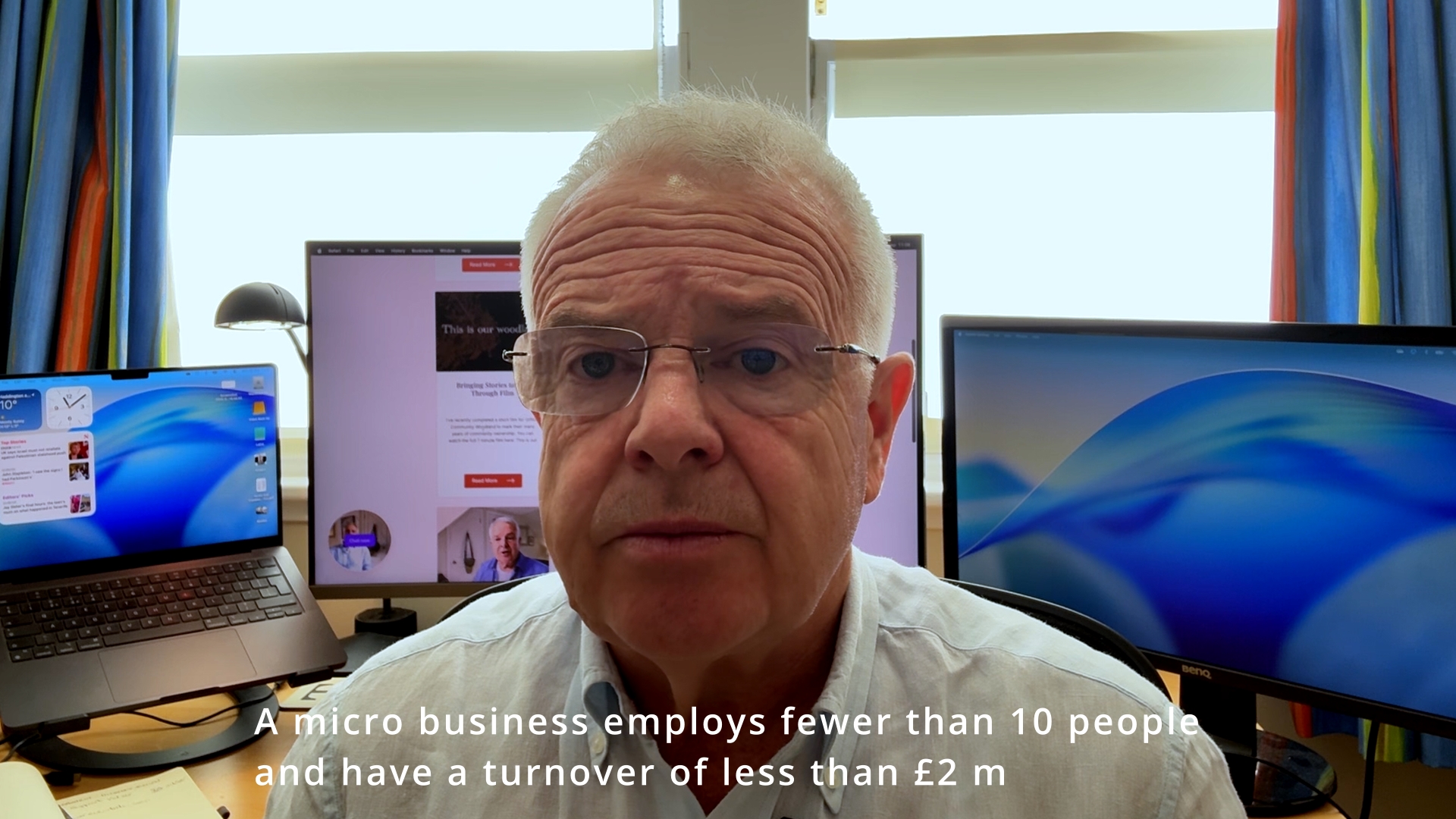
Despite this growing support, many small firms are still hesitant. Research shows that only around a third of micro businesses are using AI, compared with 60% of medium-sized firms. This slower pace matters because micro businesses make up the backbone of the UK economy. According to government data, 99.9% of UK private sector businesses are SMEs, and the majority of these are micro businesses employing fewer than 10 people (DBT Business Population Estimates 2024, gov.uk).
Why are micro businesses holding back?
Overwhelm. With AI in the news daily, it is easy for smaller firms to feel overloaded. There are so many tools, acronyms and promises that it becomes hard to know where to begin.
Skills and trust. Many owners do not feel confident in evaluating tools or understanding how data will be used. The risks around privacy and compliance feel too high.
Perceived complexity. Stories about legal teams using AI to review contracts or government departments saving hours with coding assistants can feel a world away from what a café owner or marketing manager needs.
Cost worries. Even with low-cost or free options available, the fear is that adopting AI will mean another subscription, another training curve, or wasted time.
What micro businesses can do now
For most micro businesses, the hardest part of trying AI is not money but time. Owners and managers are already juggling too much, so finding an hour to “play with AI” feels impossible. The key is to focus on tools that plug into what you already use, need little training, and deliver quick wins.
Here are some examples you could try this week:
-
Email triage and responses: Tools like Superhuman or Outlook Copilot can draft replies to routine messages and surface the most important ones. Even saving ten minutes a day adds up quickly.
-
Social media scheduling: Buffer and Hootsuite now have AI assistants that suggest captions, generate hashtags, and automatically schedule posts. That means less time staring at a blank screen and more time running your business.
-
Appointment booking: If you still juggle calls and emails to arrange meetings, adding Calendly or Acuity Scheduling with AI-powered reminders can almost eliminate that admin.
-
Customer FAQs: A lightweight chatbot such as Tidio or Intercom Starter can handle “what are your opening hours?” or “where’s my order?” without you lifting a finger.
-
Document drafting: Tools like ChatGPT or Jasper can create first drafts of proposals, contracts, or blog posts. You stay in control, but the heavy lifting is done for you.
Each of these options is low-cost or free to start, takes minutes to set up, and can be integrated into your current workflow. The aim is not to overhaul your business overnight, but to remove one or two time-draining tasks. Once you see the time savings, it becomes easier to imagine what else AI could do.
The bottom line
This week’s developments show that regulators, big tech companies and governments are all making it easier for businesses to adopt AI. Yet adoption among micro businesses remains slow. The gap is not due to a lack of support, but to a lack of confidence, clarity and time.
The best way to overcome this is to start small. Pick one process that eats up time and try an AI tool to see if it helps. Build confidence step by step, and you will soon spot bigger opportunities.
If you would like a chat about where AI might fit into your business, get in touch. A short conversation can highlight simple, achievable ways to get started, without the need for big budgets. 

